
Click here to purchase archive video
KTK Academy Vol 6. "Koji" × "Gastronomy"
Kojiya Sanzaemon, a seed koji manufacturer with 600 years of history, launched the "KOJI THE KITCHEN" project in 2021 to explore new possibilities for koji and create food culture.
Koji, which has supported Japanese food culture for centuries, has recently garnered global attention in various fields such as "gastronomy," "food tech," "gut health," and "food and agriculture."
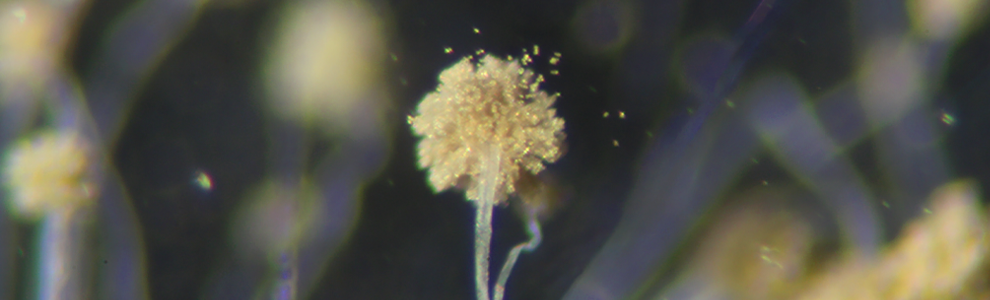
The objective of this KOJI THE KITCHEN Academy is to re-examine Japanese fermentation from the perspective of its high degree of human involvement as a "manufacturing technology" and its urban connections, rather than solely from the context of nature and rural areas.
Based on insights from gastronomy, we will re-evaluate the crucial role of "manufacturing" from farm to table and reframe it as a social mechanism that supports local communities. Through this, we aim to create a new axis for conveying Japanese fermentation culture to the world.
Theme: New Axis of Fermentation from a Gastronomy Perspective
While there is a growing tendency to emphasize the relationship between fermentation and the natural environment and agriculture, for Japanese fermentation culture, the "stability of quality" achieved through artisan techniques and the "social responsibility of brewers" in continuously supporting people's diets are also extremely important.
Japanese fermentation culture goes beyond mere processing of agricultural products; it also encompasses urban and industrial aspects such as quality control through manufacturing technology and the social responsibility of supporting local food. By re-evaluating this role of "manufacturing," we envision a sustainable food industry.
Three Perspectives on Fermentation × Gastronomy
In this project, we propose the following three approaches as new possibilities for fermentation redefined by Kojinomy × Gastronomy:
01. Fermentation as design
Controlling variations in raw materials through technology to achieve intended quality. Fermentation as advanced design.
02. Farm to Factory to Table - Connecting "Food" and "Agriculture" through "Industry"
Adding "Factory" to "Farm to Table." Fermentation as "responsibility for food supply infrastructure" and "manufacturing."
03. Factory as Social Terroir
The factory and the skills of the people working there serve as a foundation for inheriting techniques, and contributing to the local community is precisely the "terroir."
・What is Kojinomy?
Defined as the totality of knowledge that considers koji from natural science, social science, and humanities. It is a concept advocated by Kojiya Sanzaemon to learn using the five senses and create new value.
Recommended for:
● Business owners and development managers who want to incorporate koji and fermentation into their business and differentiate themselves from competitors.
● Those who want to discuss fermentation from the perspective of "manufacturing technology," not just "nature" and "agriculture."
● Those who want to connect with a community that transcends industries and job types, centered on koji.
● Those who want to propose a unique Japanese approach to existing gastronomy.
● Those who want to gain new perspectives on the connection between "fermentation" and "local communities."
*No prior knowledge is required. Participants from diverse backgrounds are welcome.
outline
- Overview -
|
Date |
February 21, 2026 (Saturday) 10:30 AM - 6:00 PM *Dinner participants are scheduled to finish around 8:20 PM |
|---|---|
|
Venue |
Hotel Arc Riche Toyohashi 4F Terrace Room (6-minute walk from Toyohashi Station on the Tokaido Shinkansen) *Dinner: Arc Riche Toyohashi Restaurant KEI |
|
Capacity |
・In-person attendance: 80 people *Registration closed* ・Online attendance: 100 people |
|
Participation Fee |
【In-person attendance】*Registration closed*
*Even if you cannot attend on the day, you can watch the archived stream later.
|
●Cancellation fees will be charged as follows: 30% from 5 days prior to the event, 50% from 2 days prior, and 100% on the day of the event.
【In-person Attendance Benefits】
|
Benefit Details |
・KOJI THE KITCHEN Academy Original Textbook *Benefits are only for in-person attendees.
|
|---|
【Access】
|
From Tokyo |
Hikari 635 (departs Tokyo 8:33 AM → arrives Toyohashi 9:53 AM) is convenient |
|---|---|
|
From Osaka |
Nozomi 80 (departs Shin-Osaka 8:45 AM → arrives Nagoya 9:34 AM = transfer = departs Nagoya 9:38 AM → arrives Toyohashi 10:04 AM) is convenient |
【Co-hosted Project】
|
|
|
|

contents
Program Details
Lecture・
Discussion
Guest lecture
Panel discussion
Fermentation Full Course Dinner
【10:30~10:45】Opening Talk
A day dedicated to the theme of koji × gastronomy. We will kick off a journey centered around koji × gastronomy with fermentation designer Hiraku Ogura and Taro Muto, organizer of Gastronomy in Kakegawa.

Sanzaemon Murai | 29th Head of Kojiya Sanzaemon
Born in Toyohashi City, Aichi Prefecture in 1979. 29th head of Kojiya Sanzaemon, a seed koji manufacturer founded in the Muromachi period, and President of Bioque Co., Ltd., which is responsible for research and development. After graduating from university, he joined the family business and has since been involved with over 3,000 brewing manufacturers, including miso, soy sauce, sake, and shochu, proposing Kojinomy, a concept that connects knowledge and industry through koji. Since 2023, he has served as a director of the Japan Brewing Association. Author of "Fermentation as Culture for Business Elites" (Asa Publishing).
 Hiraku Ogura | Fermentation Designer
Aiming to "make the invisible work of fermentation microbes visible through design," he develops projects on fermentation and microorganisms with brewers and researchers nationwide. He studies fermentation at Tokyo University of Agriculture as a research student, exploring the microbial world daily. In April 2020, he opened "Hakkou Department" in Shimokitazawa. In 2025, he will curate "Fermentation Tourism Tokai," set in the three Tokai prefectures. Author of "Fermentation Cultural Anthropology," among others. Personality for YBS Radio's "Fermentation Siblings' COZYTALK" and Podcast "#CurrentlyFermenting."

Taro Muto | Representative Director, Muto Co., Ltd. / Tabemono Radio Personality
Inherited a kaiseki restaurant from his predecessor, rooted in local food culture and tradition. While working as a chef, he hosts "Tabemono Radio" podcast, exploring the relationship between food and people from historical and social perspectives. He is also involved in town development through food and tourism, such as initiating the Kakegawa Green Tea Toast Ordinance and organizing the Kakegawa Gastronomy Symposium.
【10:45~12:00】Kojinomy & Seed Koji Overview Lecture
A basic knowledge lecture on koji and seed koji using original texts adapted from the training content of Kojiya Sanzaemon and Bioque Group. Since it will involve actual seed koji (koji mold) handled by Kojiya Sanzaemon and koji made with different koji molds, even beginners without prior knowledge can easily grasp the concepts. You will understand the history and diversity of koji and seed koji, and gain an insight into Kojinomy, a concept that comprehensively encompasses koji from natural science, social science, and humanities.
Sanzaemon Murai | 29th Head of Kojiya Sanzaemon
Born in Toyohashi City, Aichi Prefecture in 1979. 29th head of Kojiya Sanzaemon, a seed koji manufacturer founded in the Muromachi period, and President of Bioque Co., Ltd., which is responsible for research and development. After graduating from university, he joined the family business and has since been involved with over 3,000 brewing manufacturers, including miso, soy sauce, sake, and shochu, proposing Kojinomy, a concept that connects knowledge and industry through koji. Since 2023, he has served as a director of the Japan Brewing Association. Author of "Fermentation as Culture for Business Elites" (Asa Publishing).
【12:00~12:50】Lunch
【12:50~13:30】Sponsor Pitch
Presentation by our sponsor companies.
【13:00~13:20】Mini Lecture "What is Gastronomy?"
This lecture redefines gastronomy not merely as an extension of high-end cuisine, but as the totality of culture, technology, and society surrounding food. Instead of focusing on culinary perfection or price, we will deepen the meaning of the dining experience by examining the land's background, the producers' wisdom, inherited techniques, and the relationship with society.

Yukako Saito | Co-representative, JIEN LLP
Resides in Piedmont, Italy. In 2014, she founded GEN (Genuine Education Network) as a social startup certified by the Italian government. Based in Europe, she conducts business, education, and speaking activities both domestically and internationally, centered on Japanese food culture education and gastronomy tourism. From 2021, she established the international consortium JINOWA (Italy) and the social cooperative JIEN (Japan), promoting international community activities rooted in local areas, with themes of fermentation, soil, and circulation.
【13:20~14:10】Fermentation as design
For example, wine has the concept of vintage, and year-to-year changes are accepted as value. On the other hand, in Japanese fermentation culture, "unchanging taste inherited" has been strongly demanded. In this context, fermentation is not a phenomenon left to nature, but rather something designed to control variations in raw materials through technology and ensure reproducibility. In this session, we will present fermentation as "fermentation as design," which is established through advanced technology and philosophy.
Hiraku Ogura | Fermentation Designer
Aiming to "make the invisible work of fermentation microbes visible through design," he develops projects on fermentation and microorganisms with brewers and researchers nationwide. He studies fermentation at Tokyo University of Agriculture as a research student, exploring the microbial world daily. In April 2020, he opened "Hakkou Department" in Shimokitazawa. In 2025, he will curate "Fermentation Tourism Tokai," set in the three Tokai prefectures. Author of "Fermentation Cultural Anthropology," among others. Personality for YBS Radio's "Fermentation Siblings' COZYTALK" and Podcast "#CurrentlyFermenting."

Naoya Miyase | Manufacturing Manager, Sekiya Brewery
With 23 years of experience in sake brewing, having started at age 20. He has worked at 3 companies and 4 breweries before joining Sekiya Brewery 13 years ago. He served as Toji (master brewer) for Inen Fudo and custom-made sake for about 10 years. Currently, he has established the "Custom-Made Room" specializing in custom orders, supporting each customer's background and aspirations. He offers proposals that express preferences and specific tastes in sake by assembling koji and yeast, taking into account the characteristics of parallel multiple fermentation.
Moderator: Sanzaemon Murai | 29th Head of Kojiya Sanzaemon
【14:10~15:00】Fermentation Factory to Table
Japanese fermentation culture is supported not only by special dishes but also by everyday meals. And it is the presence of brewing manufacturers that has supported this stable supply. In this session, we position the "Factory" between "Farm to Table" and re-examine how "factories (manufacturing)," which support mass production and stable supply, actually form the foundation of modern food culture.

Keiko Kuroshima | Soy Sauce Sommelier
Soy Sauce Sommelier and a certified soy sauce sensory inspector by the Japan Soy Sauce Technology Center, the only body in Japan to conduct sensory evaluations of soy sauce. She is also a web and graphic designer. Born in a soy sauce town on Shodoshima, she grew up with kurabito (brewery workers). Since the age of 20, she has traveled to breweries across Japan from her base on Shodoshima, connecting good soy sauces through design, photography, writing, workshops, and recipe creation. Co-authored "Soy Sauce Book" and "Soy Sauce Book Revised Edition" with Mantaro Takahashi. https://www.genkosha.co.jp/gmook/?p=32055

Makoto Hiramatsu | Aichi Miso Tamari Soy Sauce Industrial Cooperative Association
Residing in Goyo since the Edo period, Genroku era, and currently living along the archery road of Goyo Pine Trees. During his student years, he studied the basics of food chemistry, researching immune components of dairy products and milk by the Nagara River in Gifu. After entering the workforce, he consistently worked in miso and soy sauce brewing, addressing the field of basic seasonings from both production and sales perspectives. Leveraging experiences gained through exposure to various local food cultures, he aims to explore food diversity by discovering 100 new restaurants annually through lunches and local food tours in recent years.

Yuto Saito | Representative, MISOVATION
Born in 1994 in Miyazaki Prefecture. After graduating from university, he worked at Kagome and Recruit. Feeling challenged by the "decline of traditional Japanese industries" and the "10-year gap between average life expectancy and healthy life expectancy," he founded MISOVATION to innovate health through the functional properties of miso. Featured in Nikkei Cross Trend's "100 Companies Creating the Future Market [2024 Edition]" and Forbes JAPAN's "NEXT100."
Moderator: Sanzaemon Murai | 29th Head of Kojiya Sanzaemon
【15:10~15:25】
Sponsor Pitch
Presentation by our sponsor companies.
【15:25~15:55】
Fermentation as Invisible Infrastructure: "The Circulation of Dashi and the Invisible Production Site"
"Dashi," the core of Japanese cuisine, is an indispensable element that supports umami. Approximately 70% of katsuobushi (dried bonito flakes), a representative ingredient, is produced in Kagoshima Prefecture, and about 90% of kombu (kelp) in Hokkaido, meaning that local food cultures across Japan rely on specific regions for the core of their flavors. Furthermore, katsuobushi is a fermented food made using mold, and can be re-evaluated as a fermented food distributed nationwide. In this session, we will go beyond the common notion of "local flavors established through local production for local consumption" to unravel the necessity of dashi's distribution structure. In addition, we will re-examine the sustainability of Japanese fermentation culture from the reality of production sites supported by foreign workers and the elderly.

Maiko Otsuka | Representative Director, Taiko Co., Ltd.
Spent her childhood in her hometown until age 18, then moved to Tokyo after high school. She studied veterinary medicine and worked at an animal hospital in Tokyo for about 5 years after graduation. Afterwards, she pursued her childhood dream of becoming a chef, working at Japanese kappo restaurants and macrobiotic restaurants in Tokyo before joining d47 Shokudo. Soon after joining, her menu development was highly praised, and she also handled food development for the magazine "d design travel OITA." After approximately 6 years of experience as a chef, she joined Taiko Co., Ltd. in 2019. She has been the Representative Director since October 2024. Currently, she is active as a "Katsuobushi Coordinator."
Moderator: Sanzaemon Murai | 29th Head of Kojiya Sanzaemon
【15:55~16:45】
Fermentation as Social Terroir
Japanese brewing has not always developed in natural environments like rural areas, but also in cities and transportation hubs. A system was established to supply large consumption areas like Edo and Osaka with rice and soybeans from distant areas through excellent distribution. At the same time, brewers were local notables who supported employment, economy, and culture. In this session, we will re-evaluate the urban "fermentation climate" created by brewers and factories as Factory as Social Terroir.

Kenji Nomura | Manager of Planning Department and Quality Control Department, Hatcho Miso Co., Ltd. (trade name: Kakukyu)
Born in Aichi Prefecture. Having loved nature since childhood and influenced by his father, he aimed for an agricultural degree and enrolled in the Department of Agricultural Chemistry at Meijo University. After graduating in 1998, he joined Hatcho Miso Co., Ltd. (Kakukyu) through an introduction from his professor. After gaining experience in the brewing現場 (manufacturing site), he was assigned to the Quality Control Department. He was responsible for ISO and organic certifications. Subsequently, he was involved in establishing the Planning Department, which focuses on product development and promoting the appeal of Hatcho Miso, and took on the role of Planning Department Manager. Since 2017, he has also served as the Quality Control Manager.

Kazunori Nishi | Representative Director and President, Sanwa Shurui Co., Ltd.
Born May 23, 1971, in Tokyo. Joined Sanwa Shurui Co., Ltd. in 2001, and after working in the manufacturing department, gained experience in sales. Appointed Representative Director and Sales Manager in 2009. Serving as Representative Director and President since October 2023. Under the purpose of "Filling the world with 'Wa' (harmony/Japan)," he is dedicated to the day when authentic shochu will stand alongside distilled spirits worldwide, transcending the boundaries of Japanese and Western liquors. Hobbies include motorcycles, iaido, and alcohol.
Yukako Saito | Co-representative, JIEN LLP
Resides in Piedmont, Italy. In 2014, she founded GEN (Genuine Education Network) as a social startup certified by the Italian government. Based in Europe, she conducts business, education, and speaking activities both domestically and internationally, centered on Japanese food culture education and gastronomy tourism. From 2021, she established the international consortium JINOWA (Italy) and the social cooperative JIEN (Japan), promoting international community activities rooted in local areas, with themes of fermentation, soil, and circulation.
Moderator: Sanzaemon Murai | 29th Head of Kojiya Sanzaemon
【16:45~17:00】 Discussion ~ Closing
We will reflect on the day's learning, which revolved around the theme of Koji × Gastronomy.
Panelist: Sanzaemon Murai | 29th Head of Kojiya Sanzaemon
Panelist: Hiraku Ogura | Fermentation Designer
Panelist: Taro Muto | CEO of Muto Co., Ltd. / Tabemono Radio Personality
【17:00~】 Closing & Networking Session
We will share the day's learnings on the theme of Koji x Gastronomy with participants and build a network for the future.
【18:20~20:20】Koji x Higashi-Mikawa Gastronomy Dinner
A limited dinner course to savor examples of Koji x "Gourmet Food" and "Regional Revitalization". Takeshi Imazato, the executive chef of Hotel Arc Riche Toyohashi, supervises the menu exclusively for the KOJI THE KITCHEN Academy every time. This time, we will challenge gastronomy that focuses on "Higashi-Mikawa's food manufacturing industry" and tells the story of the region from the factory. This full course uses ingredients from Higashi-Mikawa and incorporates koji and fermentation in all dishes, offering rich diversity. It will be served in the main dining room on the 16th floor of the hotel.
*Photos are from 2024. Please look forward to the exclusive menu for this event.


Takeshi Imazato, Executive Chef, Hotel Arc Riche Toyohashi
Born and raised in a family that ran a restaurant in Nagasaki Prefecture, he began his culinary career under Katsutoshi Kamikakimoto, one of the leaders in the Japanese French cuisine world. He honed his skills at L'Hotel de Hiei and French restaurants in Osaka, and after serving as the head chef of the main dining room when Hotel Arc Riche Toyohashi opened, he was appointed executive chef in 2014. He continues the concept of "local production for local consumption" and cuisine that can be enjoyed with all five senses, maximizing the quality of ingredients he has cultivated since the hotel's opening. As a member of the "Escoffier Association of Japan," he is dedicated to the development and spread of French cuisine, and also participates in activities and social contributions to make Higashi-Mikawa a mecca for food creators, as part of the "Higashi-Mikawa Food Valley Concept" promoted by the SARA Group, to which the hotel belongs.
timetable
Timetable
*For those with dinner tickets
*Please note that the program times and content may be subject to slight changes.
Thank you for your understanding.
Sponsor Introduction


